Does Scoop.it Give Backlinks? Dofollow or Nofollow
Scoop.it link checks conflict, with specific checks saying nofollow and 2026 lists saying dofollow, so the answer is unsettled and you should check your own page.
Scoop.it links are unsettled, with the more specific checks saying nofollow and several 2026 lists saying dofollow, so check the rel attribute on your own published topic page before you count on it. One guide states that Scoop.it primarily uses nofollow links.
A 2015 direct statement says all Scoop.it links are rel="nofollow", a 2026 GitHub list of 181 sites records Scoop.it as nofollow with a domain authority of 92, and a hand-verified list from May 2026 records it as nofollow with a domain authority of 80. Five 2026 lists say dofollow, so we lean nofollow and flag the split plainly.
Scoop.it is a content curation platform for professionals and businesses, where you discover third-party content, add your own insight, and publish it to public topic pages, social accounts and newsletters.
TL;DR
- The answer is unsettled: specific checks say curated links are nofollow, but several 2026 lists say dofollow, so check your own topic page.
- A free Scoop.it plan costs $0 for one topic page, and Pro costs $14.99 per month billed annually, based on search-derived reads of the official pricing page checked November 2026.
- Scoop.it buys, places or guarantees no links, and its value sits in thought leadership, referral traffic and a topic page that can rank for your theme.
How much SEO value it really has
The direct SEO value is uncertain, and that uncertainty is the point. If the link is nofollow, it does not pass ranking credit in the usual way, though Google may use it as a hint for discovery, and people who click it can reach your site.
If the link is followed, it is a followed link from a domain with an authority score in the 80s or low 90s, which is a strong domain by any measure. You cannot build a plan on a maybe, so treat any SEO value as a bonus and judge Scoop.it on the work it brings in.
A topic page works much like a board on Pinterest, and a topic page that gathers strong articles on one theme can rank for that theme, and a reader who finds it can sign up, buy, or link to your work from their own site. That second step is where the SEO value sits.
If you need followed links you can plan around, look at our guest posting service and link insertion placements, where a followed editorial link is the point. Scoop.it also gives you a public page that can rank for your brand or theme, which helps when a prospect searches for you after seeing your curation.
Use a backlink checker to see how the link is recorded, and do not assume a high domain authority on its own means a link will move rankings, since the rel attribute and the page around the link matter just as much.
How to get a link from Scoop.it
- Create a free account at scoop.it and start a topic page on one theme that matches what you write about.
- Curate content into the topic page with your own commentary, mixing your own articles with useful third-party pieces on the same theme.
- Add your own insight to each curated piece, so the page reads as a point of view, not as a list of links.
- Share the topic page to your social accounts and newsletter, and use the WordPress integration to publish curated pieces as blog posts where it fits.
- If you want public visibility and social sharing beyond the free tier, consider Pro at $14.99 per month billed annually, or $17.99 per month billed monthly, based on search-derived reads of the official pricing page checked November 2026.
Where the link appears
Your link appears on a topic page, as a curated piece with your commentary, a title and an image that points back to the article on your own site or to a third-party source.
The specific checks named above say nofollow and describe the link in detail, while the dofollow lists give a domain authority figure and a single word, with no working shown. That is why we lean nofollow. Open your own published topic page and read the rel attribute yourself before you report the link as followed or nofollow.
You can read more about how we price this kind of work on our pricing page.
Spam risk and rules
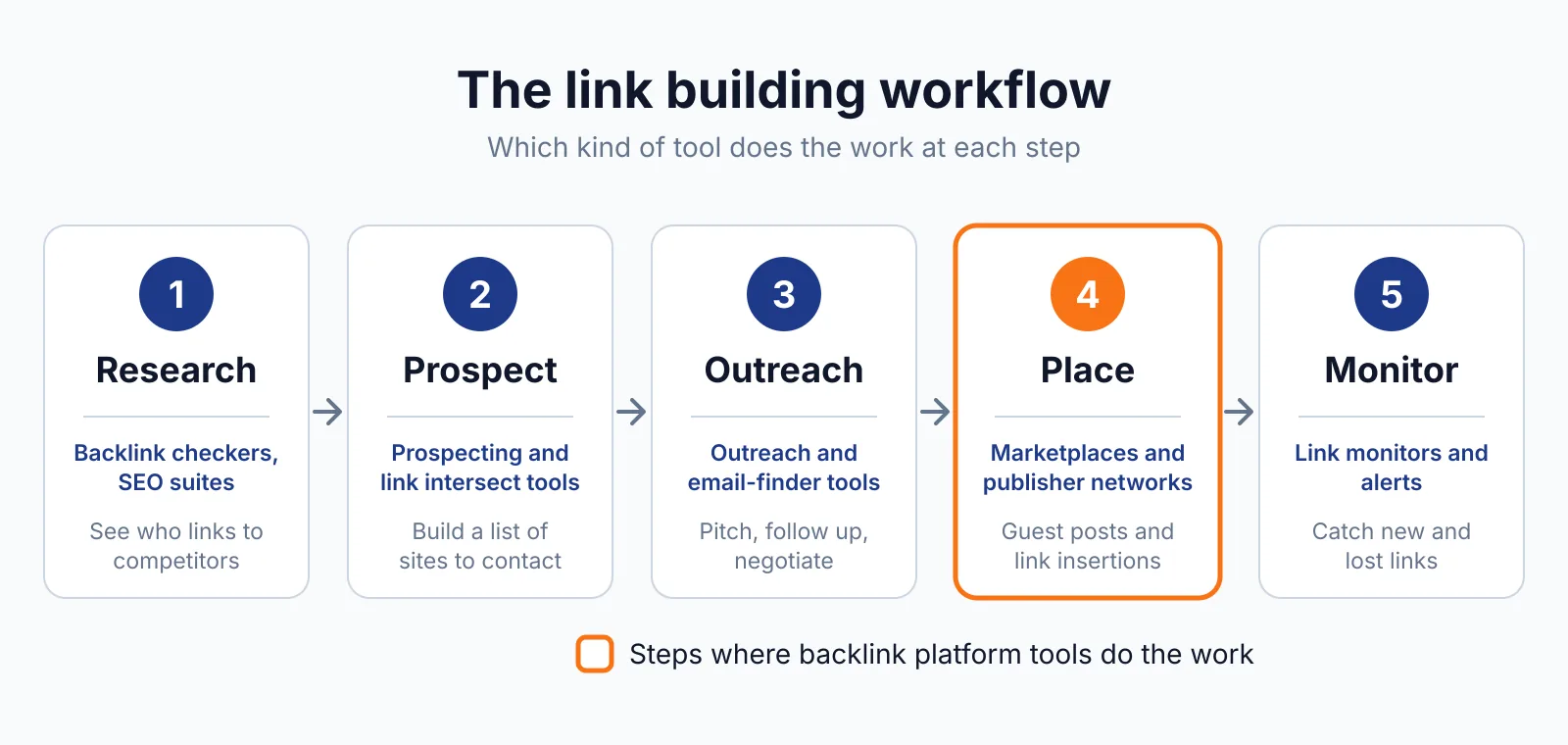
The spam risk is low if you use Scoop.it as it is meant to be used, and high if you treat it as a link farm. Scoop.it is a curation platform, not a link building tool. It buys, places or guarantees no links, and it has no backlink data, no outreach tools and no citation management.
Do not create empty topic pages, copy other people's curation, or fill a page with links to one site only. Google's rule still applies to any link you buy for ranking: paid links need rel="sponsored" or rel="nofollow", as set out in Google Search Central.
A Scoop.it link is free and unpaid, so the rule does not force a label on it, and the platform sets the rel attribute itself.
FAQ
Does Scoop.it give a dofollow backlink?
The answer is unsettled. The more specific checks say curated links are nofollow, with one guide stating that Scoop.it primarily uses nofollow links, and a 2026 list recording it as nofollow with a domain authority of 92. Five 2026 lists say dofollow, so check the rel attribute on your own published topic page before you count on it.
Is Scoop.it free?
Yes, a free plan costs $0 for one topic page, with community visibility only, based on search-derived reads of the official pricing page checked November 2026. Pro costs $14.99 per month billed annually, or $17.99 per month billed monthly, and adds public visibility and social sharing.
Plus costs $119 per month billed annually, and adds newsletters and scheduling, with a newsletter cap of 100 recipients. Enterprise pricing is custom, at around $5,000 or more per year.
Can a Scoop.it topic page still help my site rank?
It can help in indirect ways, and the direct value depends on the rel attribute, which is unsettled.
A topic page works much like a board on Pinterest, and a topic page that gathers strong articles on one theme can rank for that theme, and a reader who finds it can sign up, buy, or link to your work from their own site. That second step is where the SEO value sits.
If your goal is a followed link from a relevant site, use SaaS link building or digital PR to earn coverage, and keep Scoop.it as the curation channel that shows your point of view.
Next step
Set up one free topic page, curate your best articles with honest commentary, check the rel attribute on your live page yourself, and explore our free tools. Then use our free backlink checker to see how the link is recorded, and contact us if you want help earning followed links from sites in your niche.

The BacklinkPrice Team researches backlink prices, publisher sites and link building tools. We check prices and plans against each provider's own pages and date them, so you know how current the numbers are.
More from BacklinkPrice TeamRelated guides