What Is an Outreach Sequence? Definition, Example, and Best Practices
An outreach sequence is a planned first email plus follow-ups. Here is how to time it, an example sequence, and the rules that keep it out of spam.
An outreach sequence is a planned series of emails sent to the same contact, usually a first personalised email followed by one or two short follow-ups spaced several days apart, that stops automatically when the person replies.
In link building, sequences make sure good prospects are not lost just because they missed your first message.
Key takeaways
- A typical link building sequence is one first email plus one or two follow-ups.
- Follow-ups matter: Backlinko's study of 12 million outreach emails found follow-ups roughly doubled response rates.
- Journalists are less tolerant: Muck Rack data shows many prefer just one follow-up, ideally three to seven days later.
- Sequences should stop as soon as someone replies or asks not to be contacted.
- Google asks senders to keep spam rates below 0.1% and never reach 0.3%, so quality beats volume.
Outreach sequence definition
A sequence is the plan; each email is a step.
Each step has a message, a delay, and a stop condition. Outreach tools send the steps automatically and pause the sequence when the contact replies.
Sequences differ from one-off emails because they are designed in advance. You decide how many touches, how far apart, and what each message adds.
Example: a three-step link building sequence
Here is a simple sequence for a resource page request.
| Step | Timing | Purpose | Length |
|---|---|---|---|
| 1. First email | Day 0 | Personal opening, offer, why it fits | 50–125 words |
| 2. Follow-up 1 | Day 4–5 | Short reminder, add one new detail | 30–60 words |
| 3. Follow-up 2 | Day 10–12 | Polite last check, easy yes or no | 20–40 words |
After the final step, the sequence ends. Don't keep emailing someone who has not replied.
For email length guidance, see how to personalize outreach emails at scale.
Outreach sequence vs drip campaign
They look similar, but the purpose is different.
A drip campaign sends marketing emails to subscribers who opted in, often over weeks or months. An outreach sequence is a short, personal conversation starter sent to someone who has never heard from you.
Because outreach is unsolicited, it needs fewer steps, more personalisation, and a fast stop when someone replies or declines.
Example follow-up emails
Keep each follow-up short and useful.
Follow-up 1 might say: "Hi Priya, just checking you saw my note about the broken link on your tools page. Happy to send the replacement link if helpful."
Follow-up 2 might say: "Hi Priya, last note from me on this. If the page isn't being updated, no problem at all. Thanks for your time."
The names are placeholders. Adapt the wording to your own offer and voice.
Why outreach sequences work
People miss emails, not just ignore them.
The Backlinko outreach study of 12 million emails found an 8.5% average response rate. Sending follow-ups roughly doubled replies, and personalised subject lines lifted responses by 30.5%.
A sequence captures those extra replies without relying on memory. It also keeps your process consistent across many prospects.
Learn more in how to follow up on outreach emails.
How many follow-ups to send
One or two is usually enough.
For bloggers and site owners, one or two follow-ups is common practice. More can feel pushy and increase spam complaints.
For journalists, be lighter. PR News' summary of Muck Rack's research says 50% of journalists think one follow-up is fine, ideally three to seven days after the first email.
Muck Rack's webinar FAQ also notes that 69% of journalists prefer pitches under 200 words, so keep every step short.
Deliverability rules for sequences
Automated sequences must still look and behave like real email.
Google's email sender guidelines FAQ says senders should keep their spam rate below 0.1% and never let it reach 0.3%. Spam rate is calculated daily.
Gmail treats senders of about 5,000 or more messages a day to Gmail accounts as bulk senders, according to Bird's summary of the requirements. Link builders rarely reach that, but authentication still matters.
Set up SPF, DKIM, and DMARC, and warm up new domains. Read how to warm up an email domain for outreach.
Step-by-step: building an outreach sequence
Plan the sequence before you load contacts.
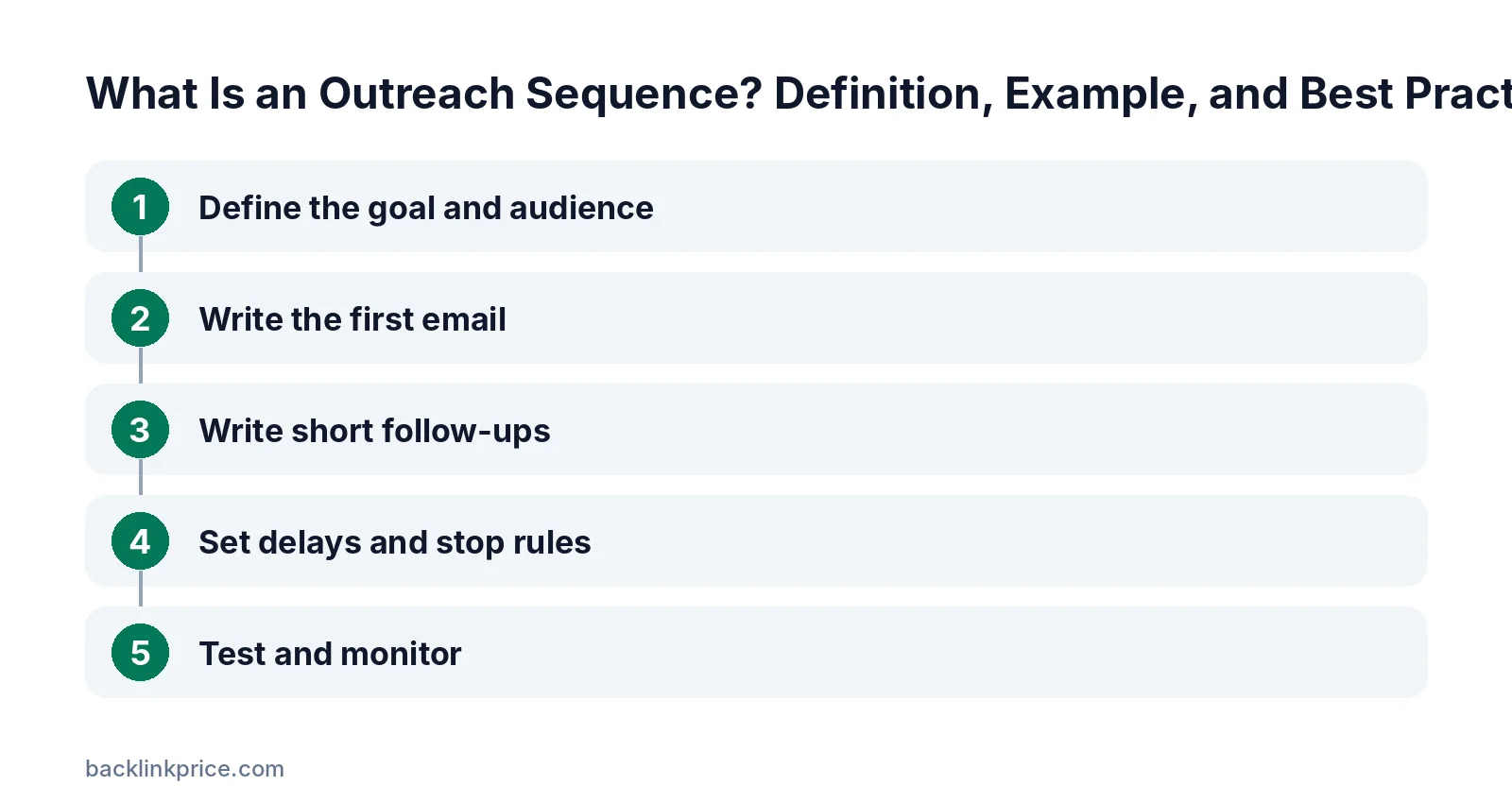
Step 1: Define the goal and audience
Decide what you are asking for, such as a resource link, a guest post, or a correction, and who you are asking. Different audiences need different sequences.
Step 2: Write the first email
Personalise the opening, state the offer in one sentence, and explain why it helps their readers. End with a simple question.
Step 3: Write short follow-ups
Each follow-up should add something: a new detail, a useful stat, or an easy way to say no. Don't just resend the first email.
Step 4: Set delays and stop rules
Space steps several days apart. Make sure the tool stops on reply, on bounce, and when someone opts out.
Step 5: Test and monitor
Send to a small batch first. Track open, reply, and placement rates, plus bounces and complaints. See how to measure outreach performance.
Tools for running outreach sequences
Most outreach tools handle steps, delays, and stop rules.
Dedicated link building tools such as Pitchbox and BuzzStream, and general sales tools, let you build multi-step sequences. Many also track opens and replies and pause sequences automatically.
Whatever tool you use, keep sending volumes modest, use a real reply-to address, and check that replies are detected correctly before scaling up.
Outreach sequence mistakes
Avoid these common problems.
- Too many steps, which annoys recipients and raises spam complaints.
- Follow-ups that guilt-trip or pressure.
- Generic templates with no personal detail.
- Sending to unverified email addresses, which causes bounces.
- Forgetting to stop the sequence after a reply.
For help with spam filters, read how to avoid spam folders in outreach.
Frequently Asked Questions
What is an outreach sequence in link building?
It is a planned set of emails sent to the same prospect, usually a first email and one or two follow-ups. The sequence stops when the prospect replies, so they get a response-driven conversation, not repeated pitches.
How long should an outreach sequence be?
Most link building sequences have two or three steps over about two weeks. Going beyond that rarely adds replies and can increase complaints.
How long should I wait between follow-ups?
Several days is common. Many link builders wait four to seven days for the first follow-up. For journalists, Muck Rack data suggests one follow-up three to seven days later.
Do outreach sequences hurt deliverability?
They can if you send to bad lists or too many people too fast. Keep volumes reasonable, authenticate your domain, and keep spam complaints well below Google's 0.3% threshold.
Should I automate outreach sequences?
Automation helps with timing and stop rules, but personalise each first email. Automated sequences with generic messages tend to get low replies and more spam reports.
Sources

The BacklinkPrice Team researches backlink prices, publisher sites and link building tools. We check prices and plans against each provider's own pages and date them, so you know how current the numbers are.
More from BacklinkPrice TeamRelated guides