Does Dev.to Give Backlinks? Dofollow or Nofollow Facts
Dev.to in-article links carry rel="noopener noreferrer" with no nofollow in live checks from July to September 2026, which makes it one of the few followed placements on this list.
Dev.to in-article links are followed, based on live rel-attribute checks of real articles from July to September 2026 that read rel="noopener noreferrer" with no nofollow, ugc or sponsored marker. A check on 9 July 2026 read ten anchors across three Dev.to articles and found the same followed string, and two September 2026 checks agreed.
Dev.to documents none of this on its own pages, so the answer rests on those live checks rather than on a Dev.to statement.
Dev.to, short for DEV Community, is a free developer blogging community built on Forem, an open-source platform, where writers publish in a Markdown editor and readers follow tags, series and authors.
It is one of the few large publishing platforms where the in-article link is followed rather than marked nofollow or ugc, and that is why it shows up on so many link building lists.
The catch is that a followed link from a community blog counts for less than an earned link from an independent site, and Dev.to can change the rel value at any time without telling anyone.
TL;DR
- Dev.to in-article Markdown links are followed, with rel="noopener noreferrer" and no nofollow marker in live checks from July to September 2026.
- The profile website link is also reported followed, with one check reading a ugc marker on the same field, so that placement is less certain.
- Writing and publishing are free, there is no paid writing plan, and DEV++ is now a prize rather than a product, checked November 2026.
How much SEO value it really has
A Dev.to link has real direct SEO value, which is rare on this list, and it still has limits. A followed link passes ranking credit in a way a nofollow link does not, and Dev.to is a strong domain with a large developer audience, so a link from a well-read article can help the linked page.
The sign-up page stated 4,204,798 developers on 10 November 2026, and the platform claims 4 million or more registered members, both search-derived figures, so treat them as approximate rather than exact. Forem, the open-source software Dev.to runs on, is published on GitHub.
The limits matter. First, the link sits on a page you wrote yourself, so Google can see it is self-published rather than earned, and a self-published link counts for less than an editorial link from an independent site.
Second, the inconsistency: on one article in September 2026, five body anchors carried rel="nofollow noopener noreferrer" while sixteen others carried only rel="noopener noreferrer", and the nofollowed set appears to be raw HTML anchors.
Dev.to articles compete with every other article on the same tags, and a followed link on a page nobody reads is worth little. Write for the developers who read the tag, publish work that teaches something, and let the link follow the article rather than leading it.
How to get a link from Dev.to
- Create a free Dev.to account, signing in with Apple, Facebook, GitHub, Google, MLH, Twitter or X, or email and password.
- Fill in your profile, including your website link, since that is the second followed placement on the platform.
- Read the top articles on your tags, so you know the length, code samples and tone readers expect.
- Write your article in the Markdown editor, using Markdown links rather than raw HTML anchors, since Markdown-rendered links are the ones the checks found followed.
- Add a canonical URL if the article first ran on your own site, so the ranking signals stay with your original page.
- Tag the post well, and answer comments after you publish, since an active article stays visible longer.
- Keep publishing on new topics instead of reposting the same article, since the community rewards fresh work and ignores repeats.
Where the link appears
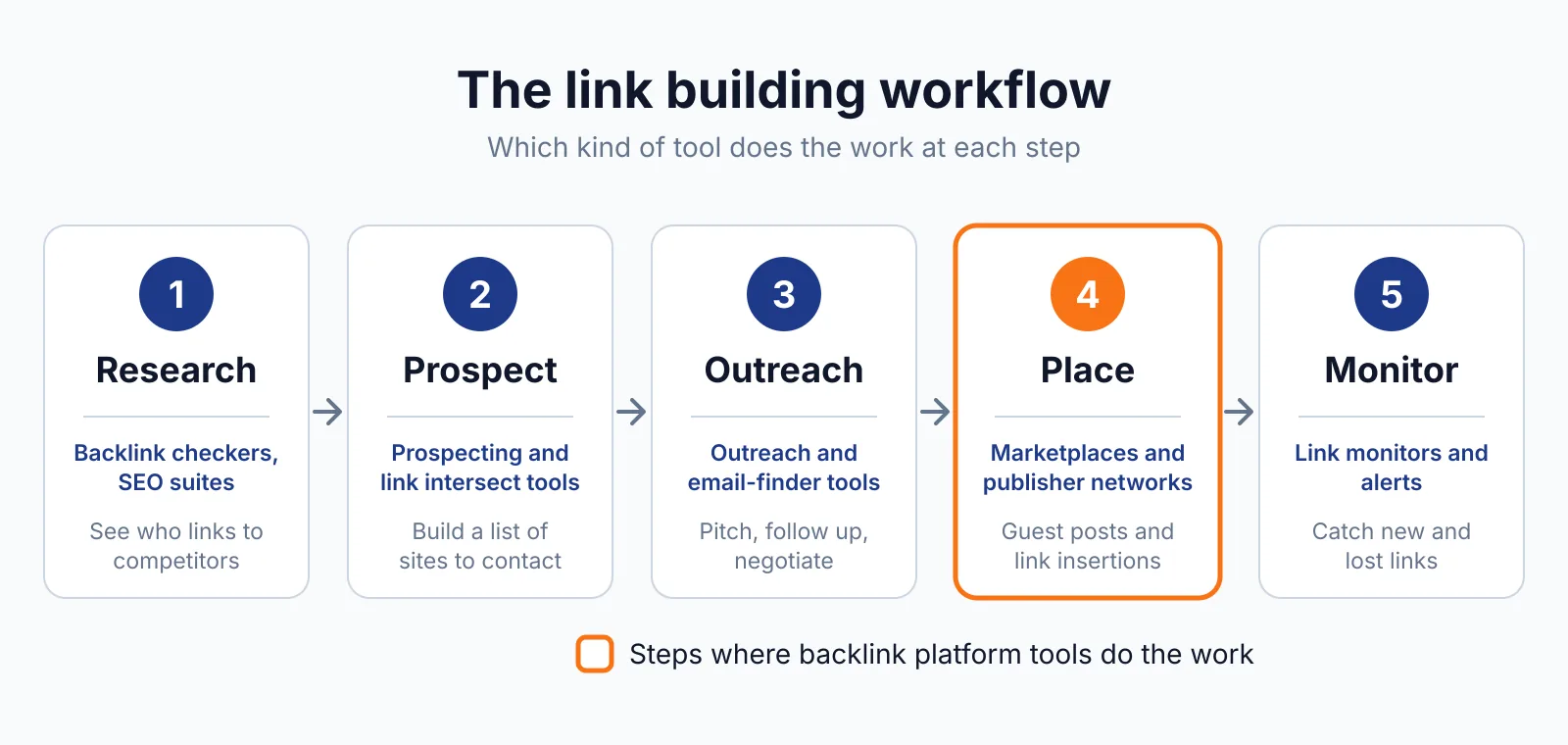
A Dev.to link can appear in four places. The first is inside the article body, where a Markdown link supports a claim or points to a longer guide, and this is the followed placement.
The second is on your profile, in the website field, which one profile check reads as rel="me noopener", also followed, while another check on the same field read rel="noopener me ugc", so that placement is less certain than the in-article link.
The third is in an organisation account, where a team publishes under a shared account, and organisation accounts are free.
The in-article link deserves a note on method. The checks that found it followed all read Markdown-rendered links, which is how Dev.to's editor produces links by default. The five nofollowed anchors on one article in September 2026 were raw HTML anchors, which suggests Dev.to sanitises pasted HTML through a stricter path.
Hashnode is the contrast case: its in-body links are ugc in the strongest check, and Hashnode sells a custom domain through Pro.
Spam risk and rules
Dev.to's risk is low compared with Reddit or Quora, because the platform is built for writers rather than for moderation battles, and the community code of conduct is the main rulebook. There is no stated link guarantee, and no official Dev.to statement on the rel value, so nothing about the link is promised.
Google's rule still applies here. Any link bought for ranking needs rel="sponsored" or rel="nofollow", as Google's spam policies state, and Dev.to is not a place to buy links at all: there is no paid writing plan, no pricing page, and DEV++ is now a prize for challenges and hackathons, not for sale.
Dev.to buys, places or guarantees no links, and no service that sells Dev.to posts can promise you a followed link or a ranking gain, since the rel value is set by the platform and can change.
FAQ
Is Dev.to really dofollow?
Yes, for Markdown-rendered in-article links, based on live checks from July to September 2026 that read rel="noopener noreferrer" with no nofollow marker.
Does Dev.to cost anything to publish on?
No. Writing and publishing are free, there is no paid writing plan and no pricing page was found, checked November 2026. Organisation accounts are free too, and the REST API is free to read, with an API key needed for writing.
Can I use a custom domain on Dev.to?
No custom domain is documented. Posts live at dev.to/username or under an organisation slug, and the way to keep ranking signals on your own site is the canonical URL support on each article, which points Google back to your original post. If a custom domain matters to you, Hashnode sells one through its Pro plan.
Next step
Write one article that teaches a developer something concrete, publish it with Markdown links and a canonical URL back to your own site, and check the rel attribute on the live page.
If you want help turning that article into a page other sites cite, see our link insertion service, check a placement with our backlink checker, or find your niche with our niche finder. Our SaaS link building service, pricing page and contact page are open if you want to talk it through.

The BacklinkPrice Team researches backlink prices, publisher sites and link building tools. We check prices and plans against each provider's own pages and date them, so you know how current the numbers are.
More from BacklinkPrice TeamRelated guides