Does Hashnode Give Backlinks? Dofollow or Nofollow
Hashnode in-body links carry rel="noopener ugc" in the strongest live check, which read 758 anchors across 72 articles in September 2026. The value is a developer audience and a custom domain, not a followed link.
Hashnode in-body links carry rel="ugc", based on the strongest live check we found, which read 72 articles across 8 real Hashnode blogs and parsed 758 outbound anchors on 16 September 2026, and every link written inside the body carried rel="noopener ugc", including links to the author's own product.
A second check in September 2026 agreed, finding ugc on custom-domain blogs and nofollow ugc on free subdomain blogs. One other check found followed links, so the answer is ugc with a flagged conflict.
Hashnode is a developer blogging platform where a free blog lives on a hashnode.dev subdomain and a paid Pro plan adds a custom domain, so your articles are indexed under a domain you own rather than under hashnode.com.
That custom domain is the real reason to look at Hashnode: it moves the indexing to your own property, which is worth more than any single link attribute.
TL;DR
- Hashnode in-body links carry rel="noopener ugc" in a 758-anchor live check from September 2026, with one conflicting check finding followed links.
- Free subdomain blogs add nofollow to the ugc marker, while custom-domain blogs carry ugc alone, based on a small September 2026 sample.
- A free blog costs $0, Pro costs $5 a month or $50 a year, and Growth costs $34 a month, checked November 2026.
How much SEO value it really has
A Hashnode link has little direct SEO value. The ugc attribute marks the link as user-generated content, which tells Google the link came from the author rather than from Hashnode's editors, and Google treats ugc as a hint rather than a firm instruction.
A hint from a user-generated link on a blog you wrote yourself is a weak signal, and the free subdomain version is weaker still, since those blogs carry rel="noopener noreferrer nofollow ugc", which adds a nofollow marker to the ugc one.
The real value is the custom domain. Pro costs $5 a month or $50 a year, per seat and per publication, and it moves your articles onto a domain you own, so the pages are indexed under your property rather than under hashnode.com.
That is worth more than any single link, because the content itself builds your domain rather than Hashnode's. Growth adds an AEO toolkit, which tracks how your content appears in AI answers across ChatGPT, Claude, Gemini and Perplexity. Our pricing page shows what a link on your own domain is worth.
A Hashnode blog is still a blog you wrote yourself, so its links count for less than earned links from independent sites. The value compounds only when you publish regularly, write for developers who read the topic, and let the custom domain collect the benefit over months rather than days.
How to get a link from Hashnode
- Create a free Hashnode account and start a blog on a hashnode.dev subdomain, with unlimited articles on one publication.
- Fill in your profile and blog settings, including your website link.
- Write your first articles on topics your buyers search for, with code samples and worked examples, and add links where they support a specific claim.
- If you want the articles indexed under your own domain, upgrade to Pro at $5 a month or $50 a year, and map your custom domain to the blog.
- Use the Pro tools: GraphQL API, headless mode, AI editor tools, webhooks, GitHub backup, bulk Markdown import, branding removal and scheduled publishing.
- Consider Growth at $34 a month for the AEO toolkit: AEO score, citation tracking, AI traffic tracking, FAQ blocks and llms.txt.
- Keep publishing on new topics instead of reposting the same article, since the audience rewards fresh work and ignores repeats.
Where the link appears
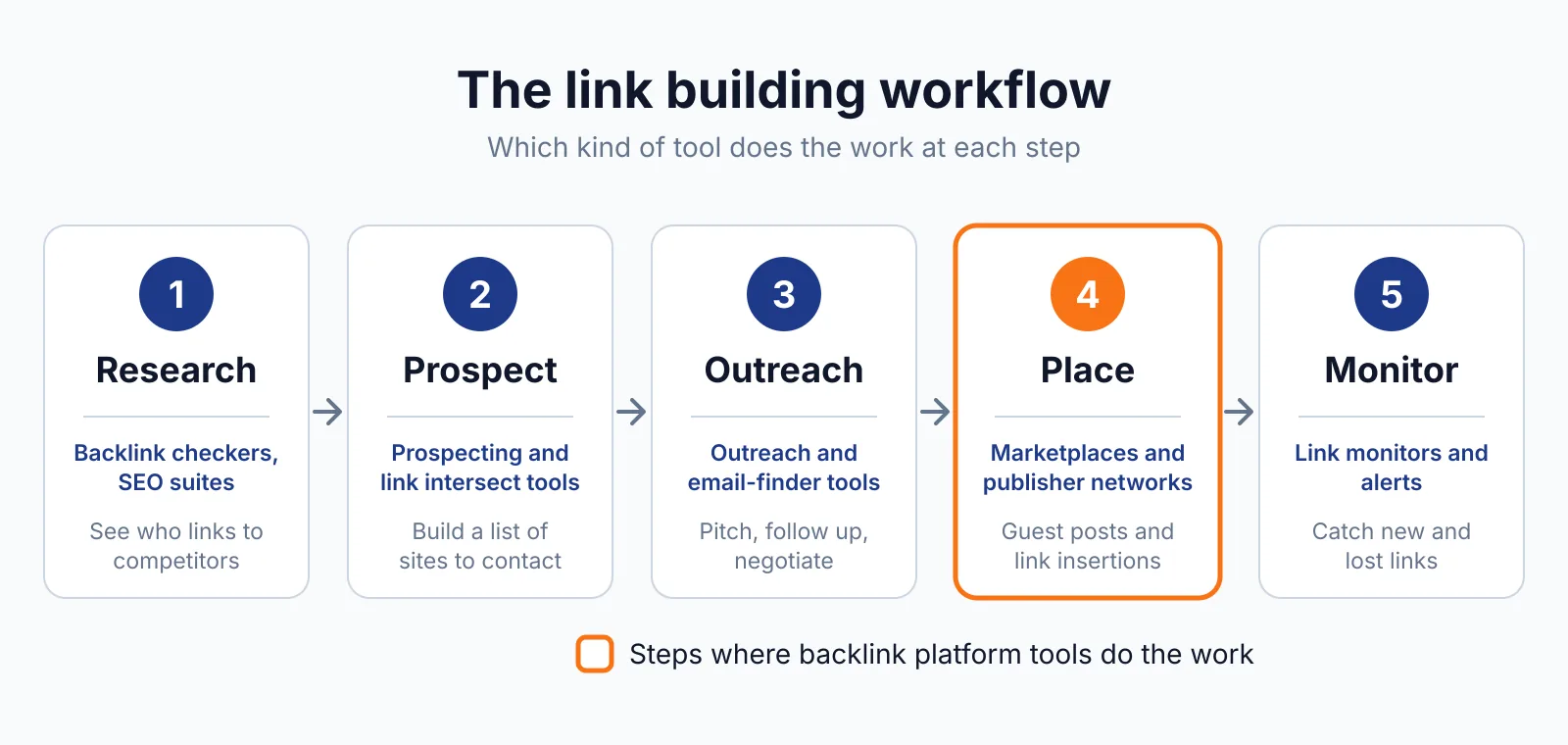
A Hashnode link can appear in four places. The first is inside the article body, where a link supports a claim or points to a longer guide, and this is the ugc placement. The second is on your profile and your blog header, where readers who like your writing go to find your main site.
The fourth is on the custom domain itself, where the whole blog lives under your property once Pro is active.
The subdomain split deserves a note. The September 2026 check that compared the two found free hashnode.dev subdomain blogs carrying rel="noopener noreferrer nofollow ugc" on three blogs, while custom-domain blogs carried rel="noopener ugc" on two blogs, and the author could not confirm that custom-domain mapping is the trigger.
The conflicting check found blog-page links carrying rel="noopener" only, so we follow the 758-anchor finding as the strongest evidence. Dev.to is the contrast case: its Markdown links are followed, and Dev.to is free to publish on.
Spam risk and rules
Hashnode's risk is low, because the platform is built for developers who blog regularly, and there is no stated link guarantee to break. No official Hashnode statement on the rel value was found, so nothing about the link is promised, and the rel value can change without notice.
The pricing carries a conflict worth flagging. The Pro page lists Pro at $5 a month or $50 a year, with two months free, and Growth at $34 a month or $340 a year, with each extra seat at $5 a month, checked November 2026.
The FAQ on the same page says Growth is a flat $29 a month on top of your Pro seats, which conflicts with the $34 a month card, so check the current price on the page before you pay.
Google's rule still applies here. Any link bought for ranking needs rel="sponsored" or rel="nofollow", as Google's spam policies state, and Hashnode is not a place to buy links at all: it sells a blogging platform, not placements. Medium works the same way for article links.
Hashnode buys, places or guarantees no links, and no service that sells Hashnode posts can promise you a followed link or a ranking gain, since the rel value is set by the platform and can change.
FAQ
Does Hashnode give a dofollow backlink?
No, based on the strongest live check, which read 758 anchors across 72 articles in September 2026 and found rel="noopener ugc" on every in-body link.
What does Hashnode Pro cost, and is it worth it?
Pro costs $5 a month or $50 a year per seat and per publication, checked November 2026, and it buys a custom domain, the GraphQL API, headless mode, AI editor tools, GitHub backup, bulk Markdown import and branding removal, with up to ten publications.
What does Growth add over Pro?
Growth costs $34 a month or $340 a year, checked November 2026, and it adds an AEO toolkit: AEO score, citation tracking, AI traffic tracking, FAQ blocks, Q and A rewrites, AI crawler controls and llms.txt.
Next step
Start a free Hashnode blog, publish three articles your buyers would actually read, and upgrade to Pro when you want the work indexed under your own domain. If you want help turning that blog into pages other sites cite, see our white-label link building service, check our price checker, or browse guest posting, link insertion and our tools page.

The BacklinkPrice Team researches backlink prices, publisher sites and link building tools. We check prices and plans against each provider's own pages and date them, so you know how current the numbers are.
More from BacklinkPrice TeamRelated guides