Link Building for Chiropractors: A Practical Guide for Clinics
How chiropractic clinics earn local links from sports clubs, schools, associations and local media, while following state board advertising rules.
Link building for chiropractors means earning local, relevant links from sports clubs, schools, gyms, professional associations, local media, and accurate business listings, supported by helpful patient education content.
Every claim must follow your state board's advertising rules, which often restrict testimonials and promises of results.
Key takeaways
- Chiropractic practices win most patients through local search, so local links matter more than national ones.
- Sports teams, running clubs, gyms, and schools are natural partners for chiropractors.
- State boards regulate chiropractic advertising; for example, Colorado prohibits unsubstantiated testimonials and guarantees of a cure.
- Ohio's rules allow testimonials only with the patient's written consent, among other conditions.
- Patients increasingly use online reviews and AI tools to choose healthcare providers.
Why links matter for chiropractors
Local links help you show up for nearby patients.
Most chiropractic searches are local, like "chiropractor near me" or "back pain clinic in [city]". Links from local organisations show search engines your clinic is part of the community.
They also bring referral visits from people who already trust the linking organisation, such as members of a sports club or parents at a local school.
Read what is local link building for the basics.
Advertising rules for chiropractors
Check your state board before publishing claims.
Rules vary by state. Colorado's chiropractic advertising rule lists unsubstantiated testimonials and advertising that guarantees a cure among misleading practices.
Ohio's Rule 4734-9-02 covers all chiropractic advertising and solicitation. An earlier version states testimonials may be used only with the patient's written consent, among other conditions.
Florida's board prohibits deceptive and misleading advertising by chiropractors. Check your own state's rules and get advice if unsure. This is not legal advice.
Best link sources for chiropractors
Focus on community and professional relationships.
| Source | How to earn the link | Effort |
|---|---|---|
| Sports clubs and teams | Sponsorship, injury-prevention talks | Low to medium |
| Running and cycling clubs | Partner discounts, event support | Low |
| Gyms and fitness studios | Referral partnerships, workshops | Medium |
| Schools and colleges | Posture or sports-safety talks | Medium |
| Chiropractic associations | Member directories, committees | Low |
| Local media | Expert comment on back pain, ergonomics | Medium |
| Business listings | Accurate profiles on major directories | Low |
Step-by-step: link building for a chiropractic clinic
Start with local relationships you already have.
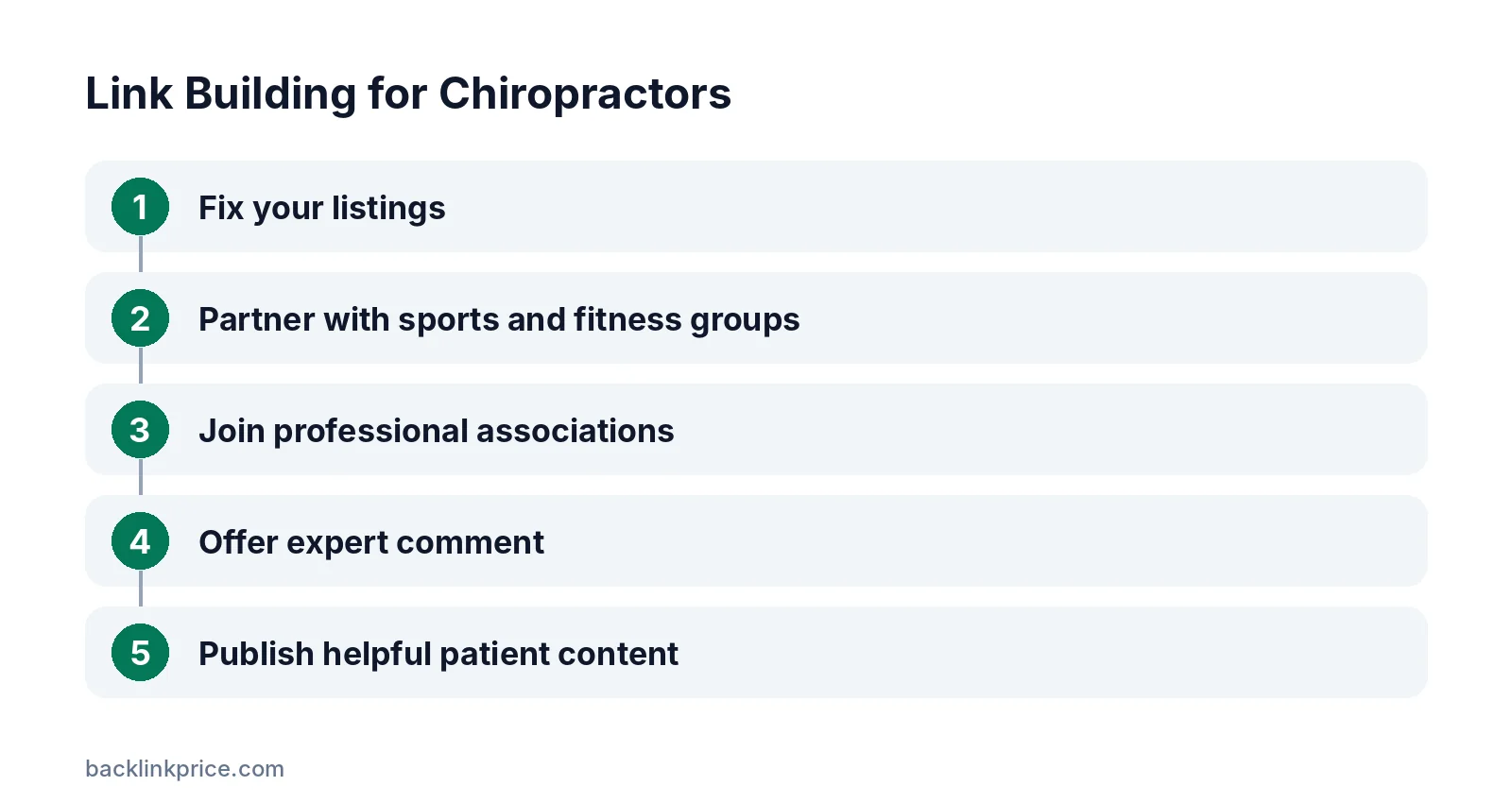
Step 1: Fix your listings
Make sure your clinic name, address, phone, and website are consistent across your Google Business Profile and major directories. Fix old addresses if you have moved.
See local citations vs local backlinks for the difference.
Step 2: Partner with sports and fitness groups
Offer injury-prevention talks, event support, or member benefits to local clubs and gyms. Many list partners on their websites, often with a short description and a link.
Read how to get backlinks from sponsorships.
Step 3: Join professional associations
State and national chiropractic associations often list members in public directories. Committee work, conference talks, or newsletter articles can earn further mentions.
Step 4: Offer expert comment
Local reporters cover topics like back pain, workplace ergonomics, and sports injuries. Offer short, accurate comment, and stay within what your evidence supports.
See how to get backlinks from journalists.
Step 5: Publish helpful patient content
Write clear guides such as desk ergonomics tips or warm-up routines, reviewed by a licensed chiropractor. Avoid promising outcomes.
Content ideas that earn links for chiropractors
Useful, practical guides attract links from local partners.
- A desk setup and posture guide for office workers.
- Warm-up and stretching routines for local running clubs.
- A backpack safety guide for parents and schools.
- Lifting technique tips for warehouse and trade workers.
- A guide to choosing a supportive mattress or pillow, without product claims.
Share each guide with the groups it helps, such as clubs, schools, and employers. Many will link to a useful, non-promotional resource.
Keep advice general and safe, and add a note that readers should seek professional assessment for pain or injury.
Community events that lead to links
Show up where your patients are.
Health fairs, charity runs, school sports days, and workplace wellness weeks often list partners and sponsors online. Offering free posture checks or talks can earn both links and goodwill.
Choose events that match your services and that your team genuinely supports. Ask organisers whether they credit partners on their website.
How patients choose providers online
Reviews and AI tools both play a role.
Medical Economics reported on a rater8 survey that found 84% of patients check online reviews before choosing a new provider.
The 2026 rater8 report, also covered by Medical Economics, found 36% of recent doctor-seekers named AI tools as a top influence. These surveys cover healthcare providers broadly, not chiropractors specifically.
Working with referral partners
Professional relationships often lead to links.
Physical therapists, massage therapists, personal trainers, and sports medicine clinics often refer patients to each other. A shared "trusted partners" page on each site is natural when the relationship is real.
Avoid link exchanges with unrelated businesses just for SEO. Google's guidelines treat excessive link exchanges as a link scheme, so keep partner links to genuine relationships.
Mistakes chiropractors should avoid
These shortcuts create risk.
- Buying links from unrelated or spammy sites.
- Posting testimonials that break your board's rules.
- Promising cures or specific outcomes.
- Inconsistent listings across directories.
- Publishing health content without professional review.
Google's spam policies treat buying links that pass ranking credit as link spam.
How to measure results
Track local outcomes, not just link counts.
- Referring domains from local and health-related sites.
- Rankings for "chiropractor in [city]" and condition terms.
- Calls and bookings from your Google Business Profile.
- New patients who found you online.
Read how to get local backlinks for more ideas.
Frequently Asked Questions
What are the best backlinks for a chiropractor?
Links from local sports clubs, gyms, schools, chiropractic associations, and local media are among the most useful. They are relevant to your services and your area.
Can chiropractors use patient testimonials online?
It depends on your state. Some boards restrict or set conditions on testimonials, such as written consent, and many prohibit unsubstantiated ones. Check your board's rules first.
How long does link building take for a chiropractic clinic?
Listing and partnership links can appear within weeks. Media coverage and content-driven links usually take several months.
Do online reviews help chiropractic SEO?
Reviews influence which provider patients choose and support local visibility. Ask real patients for honest reviews, within your board's rules.
Should chiropractors blog?
Yes, if the content is accurate, reviewed by a licensed chiropractor, and avoids promising outcomes. Helpful guides can earn links from schools, gyms, and community sites.
Sources

The BacklinkPrice Team researches backlink prices, publisher sites and link building tools. We check prices and plans against each provider's own pages and date them, so you know how current the numbers are.
More from BacklinkPrice TeamRelated guides