Link Building in India: A Practical Guide for 2026
Target Google, localise for Indian readers and languages, win Indian media with data, and label paid content the way ASCI expects.
Link building in India works best when you target Google, publish content made for Indian readers (including Indian languages where relevant), earn links from Indian news, trade, education, and startup sites with real data and stories, and clearly label any paid content.
India's huge guest post market makes careful vetting essential, because many sites exist mainly to sell links.
Key takeaways
- Google dominates Indian search: Statcounter put Google at 98.06% and Bing at 1.11% in October 2026.
- On desktop, Bing's share is higher, at about 3.04% in July 2026, which matters for B2B audiences.
- ASCI's influencer guidelines list "paid-for links" within digital advertising and require clear labels such as #ad or #sponsored for social content.
- Indian startup, business, and regional media are strong targets for data-led digital PR.
- Many sites selling guest posts have little real traffic, so vet every prospect.
How people search in India
Optimise for Google first, especially on mobile.
Statcounter's India data showed Google at 98.06% and Bing at 1.11% of search share in October 2026. On desktop, Bing reached about 3.04% in July 2026.
Bing still matters for some AI assistants. Read how to get your site indexed in Bing.
What makes link building in India different
Scale, language, and a large link-selling market shape the work.
- Language: India has many languages. Content in Hindi or regional languages can reach audiences English content misses.
- Media: National, regional, startup, and trade outlets all publish online.
- Marketplace: Many Indian and global sellers offer guest posts on Indian-focused sites, so quality varies widely.
- Regulation: The Advertising Standards Council of India (ASCI) sets self-regulatory advertising standards.
For links across languages, see do links from foreign-language sites help.
Labelling paid content in India
Disclose paid promotions clearly.
ASCI's 2021 guidelines for influencer advertising define digital media to include sponsored posts, branded content, promotional blogs, and paid-for links. They require promotional content to be identifiable as advertising.
ASCI's influencer FAQs say it can issue notices to both the brand and the influencer for violations. Approved labels reported for social content include #ad, #collab, #promo, #sponsored, and #partnership.
For Google, paid links should use rel="sponsored" or nofollow. This is not legal advice.
Where to get links in India
Plan a mix of sources.
| Source | Examples | How to earn |
|---|---|---|
| National and regional news | English and regional-language news sites | Data stories, expert comment |
| Startup and business media | Startup and business news portals | Funding, growth, founder stories |
| Trade publications | Sector magazines and portals | Industry data and insights |
| Education | Universities, colleges, edtech blogs | Scholarships, guest lectures, research |
| Associations and chambers | Industry bodies, local chambers | Membership, events, sponsorships |
| Communities and events | Meetups, conferences, hackathons | Speaking, sponsoring, hosting |
Step-by-step: building links in India
Plan for Indian readers from the start.
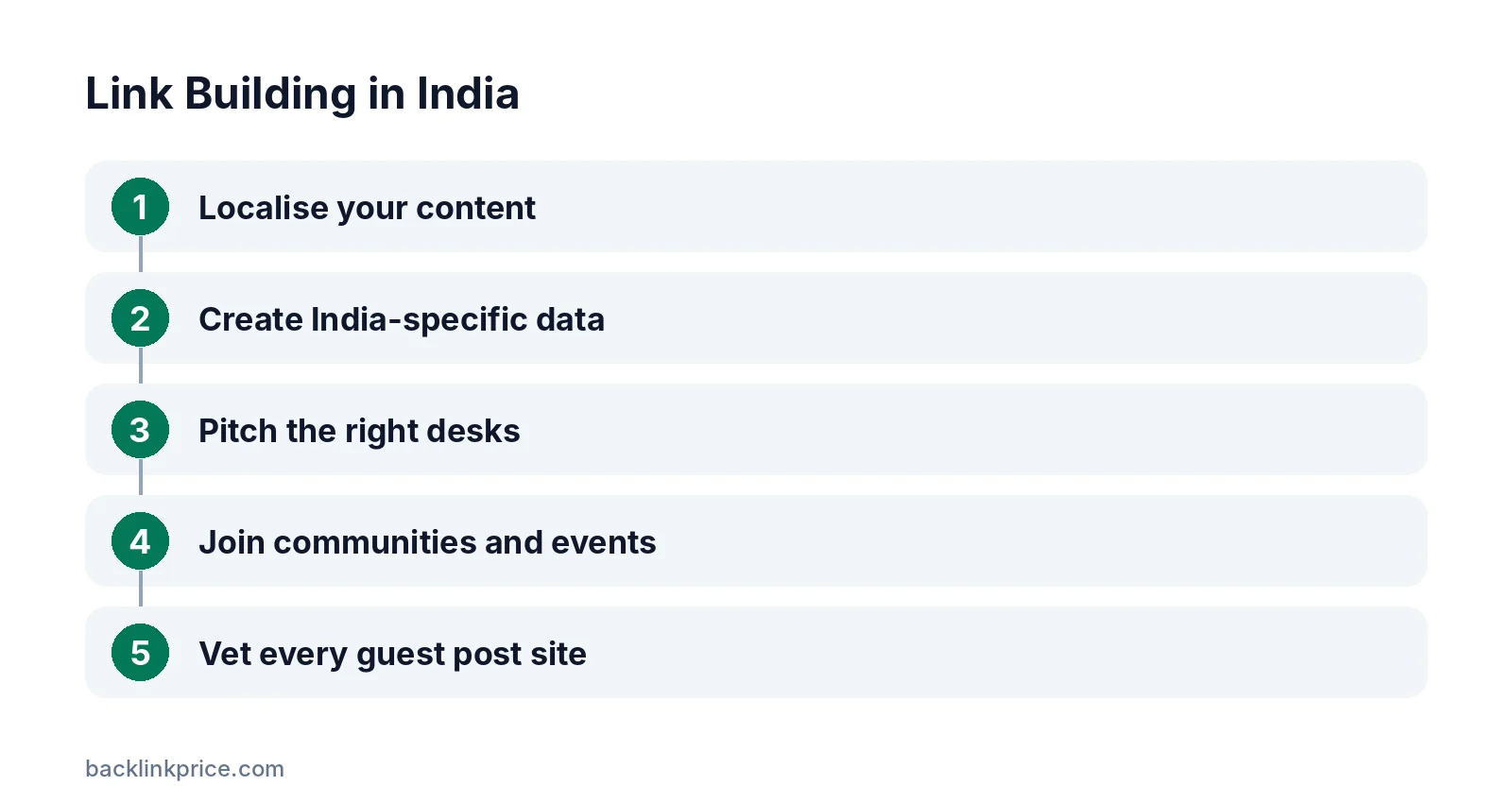
Step 1: Localise your content
Use Indian examples, prices in rupees, Indian laws and sources, and local spellings where relevant. Consider Hindi or regional-language versions for important pages.
Step 2: Create India-specific data
Survey Indian consumers or businesses, or analyse public Indian data, and break results down by state or city. Regional angles help you reach regional media.
Our guide on how to get backlinks with original research explains survey design.
Step 3: Pitch the right desks
Pitch national, regional, startup, and trade journalists separately, with angles that fit each. Keep pitches short and relevant.
Cision's 2025 survey found 86% of journalists reject pitches mainly for lack of relevance.
Step 4: Join communities and events
India has active startup, developer, and industry communities. Speaking, sponsoring, or hosting events can earn links from event pages and recaps.
Read how to get backlinks from events for ideas.
Step 5: Vet every guest post site
Check real organic traffic, relevance, outbound links, and editorial quality before agreeing to any placement. Avoid sites that publish on every topic.
See how to tell if a guest post site is spammy.
Why brand mentions matter for Indian AI search
Coverage in Indian media helps both rankings and AI answers.
An Ahrefs study of 75,000 brands found branded web mentions correlated at 0.664 with visibility in Google's AI Overviews, compared with 0.218 for backlinks. Being named by Indian publications builds both.
Original Indian data stands out because most content earns nothing. The Backlinko and BuzzSumo content study of 912 million posts found 94% had zero external links.
A state-by-state data story can be cited by journalists, AI assistants, and the sites that pick up the coverage.
Common mistakes in Indian link building
These shortcuts waste money or create risk.
- Buying cheap guest posts on sites with no real traffic.
- Using the same keyword-rich anchor text across many sites.
- Ignoring regional-language audiences.
- Pitching national media with stories that only suit local outlets.
- Not labelling paid placements.
Google's spam policies treat buying links that pass ranking credit as link spam.
Working with Indian agencies and freelancers
India has a large SEO services market, so choose partners carefully.
Ask for examples of links they built, with live URLs, and check those sites' real traffic and relevance yourself. Be cautious of fixed price lists for "DA 50+ links" on unrelated sites.
Agree in writing which tactics are allowed, how links are reported, and that paid placements will be labelled. Clear terms protect both sides.
How to measure results
Track Indian results separately.
- Referring domains from Indian sites and .in domains.
- Rankings in Google India for target terms.
- Organic traffic from India and by state.
- Coverage in national, regional, and trade media.
Use how to track backlinks to set up reports.
Frequently Asked Questions
Do I need .in links to rank in India?
Not exclusively. Relevant links from Indian publications and organisations help, but strong international links also count. Relevance and audience matter more than the domain ending.
Is Google the only search engine that matters in India?
Google dominates, with Statcounter reporting about 98% share in October 2026. Bing has a small but higher share on desktop, and it also feeds some AI assistants.
Should I create content in Hindi or regional languages?
If your audience reads those languages, yes. Regional-language content can reach readers and media that English content misses, and it opens links from regional-language sites.
Are guest posts in India safe?
They can be, if the site is real, relevant, and has genuine traffic. Many guest post sites exist mainly to sell links, so vet carefully and mark paid links as sponsored.
What are ASCI's rules on paid content?
ASCI's influencer guidelines require promotional content to be clearly identifiable as advertising. They include paid-for links within digital media advertising and list labels such as #ad and #sponsored for social posts.
Sources
- Statcounter: Search engine market share in India
- Statcounter: Desktop search engine market share in India
- ASCI: Guidelines for influencer advertising in digital media (2021 press release)
- ASCI.Social: FAQs
- Ahrefs: AI Overview brand correlation study
- Backlinko: Content study
- Cision: 2025 State of the Media takeaways
- Google Search Central: Spam policies

The BacklinkPrice Team researches backlink prices, publisher sites and link building tools. We check prices and plans against each provider's own pages and date them, so you know how current the numbers are.
More from BacklinkPrice TeamRelated guides